


Technical Specification on Adhesive-Side Printing Properties of Self-Adhesive Labels
2026-04-13

News
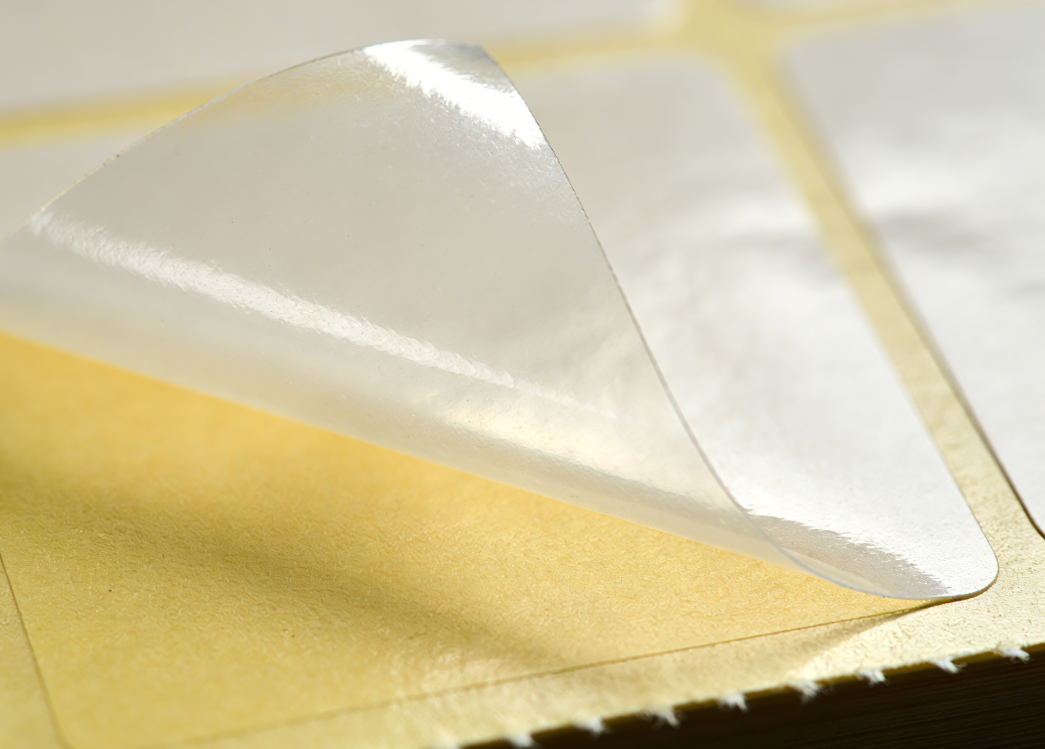
Film hot melt adhesive self-adhesive labels are widely used in food, daily chemical, electronics and other industries due to their advantages of light weight, good conformability and wide application scenarios. However, swelling issues frequently occur during actual production, storage and application, which not only cause appearance defects such as volume expansion, deformation and edge warping of labels, but also may affect the bonding stability and service life of labels, bringing potential quality hazards to manufacturers and usage troubles to end users.
The essence of swelling is the component migration and compatibility imbalance between hot melt adhesive and film face stock. The core driving factors can be summarized into four points:
To ensure adhesion and fluidity, conventional hot melt adhesive formulations usually contain components such as low-molecular-weight mineral oil and small-molecule tackifiers. These small-molecule substances have strong mobility. After the hot melt adhesive is bonded to the film, they will break through the interface between the adhesive layer and the film and penetrate into the film via molecular diffusion. For example, small-molecule oil in hot melt adhesive will directly penetrate into the molecular gaps of PP film, destroying intermolecular forces. The migration ability of small molecules is inversely proportional to their molecular weight—the smaller the molecular weight and the higher the content, the greater the swelling risk.

Following the principle of "like dissolves like", the polarity matching degree of materials directly determines compatibility. Excessively high compatibility tends to cause excessive penetration:
Films differ significantly in molecular arrangement density and crystallinity, which directly determine their anti-penetration ability:
High temperature accelerates the thermal motion of small molecules in hot melt adhesive, increasing their penetration rate; high humidity may cause slight moisture absorption of the film, enlarging molecular gaps and facilitating small-molecule penetration. In addition, excessive coating amount of hot melt adhesive or continuous pressure after labeling will increase the driving force for component migration and aggravate swelling.
Based on the causes of swelling, the core directions to alleviate swelling are blocking small-molecule migration and optimizing material matching. Specifically, you can try to select hot melt adhesive with high-molecular-weight components, film face stock with high crystallinity or surface modification, etc. However, the optimization of such materials and related processes will increase production and material costs, and the cost performance needs to be comprehensively evaluated according to actual needs.